William Smith was born in Elgin
near the Moray Firth in Scotland on 1st March 1870. The third child
of five children, the Smiths lived as farmers near the villages of Dallas and
Kellas and struggled to make ends meet during the industrial
revolution.
As the British expanded their
colonies in India, Sri Lanka, Burma and Malaya, opportunities arose for young
men seeking adventure and fortune abroad. William Smith, now a 20-year old engineer,
was one of those who made the journey east, and ended up in Malaya in Batu
Gajah, where he worked for Charles Alma Baker doing survey work and road
construction. He eventually set up his own firm William Smith, Civil Engineers,
Architects and Contractors.
His business prospered, and he
eventually managed to acquire large tracts of land in Batu Gajah for cultivation.
He initially wanted to plant coffee; but after coffee prices in the market
crashed due to competition from Brazil, he switched to rubber. Rubber was in
high demand as the raw material for tyres, and his rubber plantation was a
success.
In 1903, he returned to Scotland
to see his dying mother. William decided to take on his mother’s name of Kellie
and was henceforth known as William Kellie Smith. According to some accounts, on his
return to Malaya, he met a woman named Agnes on the ship headed to Penang. They
must have fell in love almost immediately as they were soon married. Other accounts have a different origin to their marriage, in that she was his childhood sweetheart and he returned to Britain to bring her back as his wife.
 |
| William Kellie Smith |
In Batu Gajah, they lived in a
wooden bungalow on William’s estate called Kellas House, named after his
family’s farm in Scotland, “Easter Kellas”. In 1904, Agnes gave birth to a baby
girl called Helen. Agnes being from a wealthy background and living in the Far
East for the first time was probably less than impressed with William Kellie
Smith's old wooden bungalow.
From 1909-1910 he set about
replacing his wooden Kellas House with a cooler brick and stone version, the
ruins of which are still visible today behind the main Kellie's Castle
building. Subsequently in 1915, with the birth of his son and heir Anthony,
William started planning for a huge castle with a mix of Scottish, Moorish and
Tamil Indian architecture adjacent to his house.
William brought in 70 Tamil
craftsmen from Madras, India
to work on his castle. All the bricks and marble were imported from India too.
Included in the plans was a tower for Malaya's first elevator, an
indoor tennis court and a rooftop courtyard for entertaining.
In 1918, during construction, a
virulent strain of Spanish Flu struck
and killed many of his Tamil workers and craftsmen. When his workers approached
him to build a temple to Mariamman nearby to ask the
deity for forgiveness and protection, William readily agreed. When the new
temple was consecrated, the sickness ended. In return for his generosity, the
workers built a statue of William beside the other hindu deities on the
temple. Descendants of the Tamil workers brought over to Malaya to work on the castle are said to still live nearby
even now.
Work on the castle resumed and by
1926 it was nearing completion. By this time young Anthony had been sent back
to Britain for his education and it seems Agnes had gone too. Whether her
departure was temporary or she had become fed up with Batu Gajah society is not
known.
William visited Britain to see his
wife and son and then proceeded to Portugal from where he was ordering a lift
to install in the Castle, which would have been the first elevator in Malaya.
While in Lisbon he contracted pneumonia and died at the age of 56. He was
buried there.
Agnes never returned to Malaya and she sold her interest in the Kellas estate to a British owned plantations company called Harrisons & Crosfield (now part of the Sime Darby conglomerate). The new owners were not interested in continuing the build of the castle, neglected it and allowed it to be reclaimed by the jungle.
In the end, the old Kellas House ruins (it was destroyed by Japanese bombing during World War II) and the unfinished Castle would eventually come to be known as "Kellie's Folly" or "Kellie's Castle" amongst the local community.
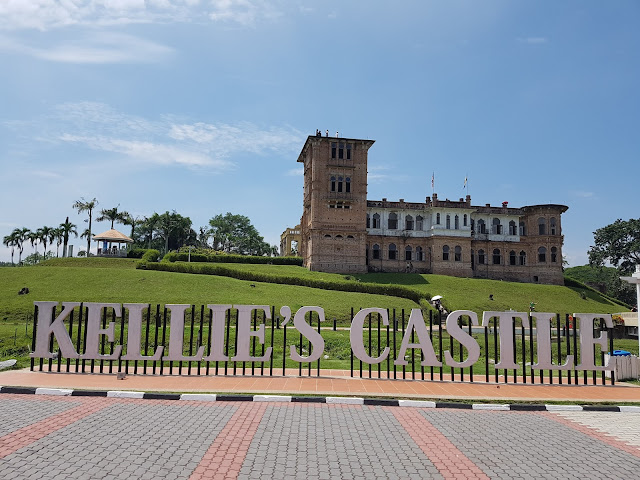 |
| Kellie's Castle, today. |
For years, the Castle was left abandoned and to decay. Rumours spread of it being haunted, with William's spirit apparently seen pacing the second floor corridor at night. His daughter, Helen has also been seen in her old bedroom wearing her white blouse.
Adding to the mysteriousness of the Castle are tales of hidden rooms and secret tunnels. William built three tunnels, one leading to the Hindu Temple, a second leading to where William kept his car and a third, which was actually only discovered in 2003, when road widening works were carried out by the government.
Eventually, interest in the abandoned Castle lead to the powers-that-be to open it up as a tourist attraction. A visitor's centre has been built beside the Jalan Gopeng road (route A8), which is the main road between the town of Gopeng to Batu Gajah. A pedestrian bridge connects the visitor's centre to Kellie's castle across the Sungai Raya, a tributary of the Kinta river.
 |
| The visitor centre, photo taken from across the Sungai Raya from Kellie's Castle. |
 |
| Food stalls at the Visitor's Centre. |
The Visitor's Centre is a modern building with ample open air carparks on both sides. There are some food stalls, a souvenir stall and restroom facilities. This is also where you buy your entry tickets.
 |
| Ticket counter. |
The ticket counter is open daily from 9am to 5:30pm. Kellie's Castle closes at 6pm. Entrance fees are RM10 per adult and RM8 for children between 3 and 12 year's old. If you can show a Malaysian identity card, you can get a discounted price of RM5 per adult, RM3 per child and RM4 for a senior citizen above 60 years old.
 |
| After you buy your tickets, you can cross the bridge. |
 |
| Crossing the Raya river. |
 |
| Once across, admire the view of the castle. |
 |
| Walk along the pathway to get a view from the other end. |
 |
| Clamber up the steps to see the tower from the side view. |
 |
| From the garden, you can appreciate the Castle's moorish architecture. The ruins of the Kellas House lies to the left. |
 |
| The Kellas House was William's house. |
 |
| This structure replaced an original wooden house that Kellie originally lived in. |
 |
| Kellas House was apparently bombed during World War II by the Japanese leaving it in ruins. |
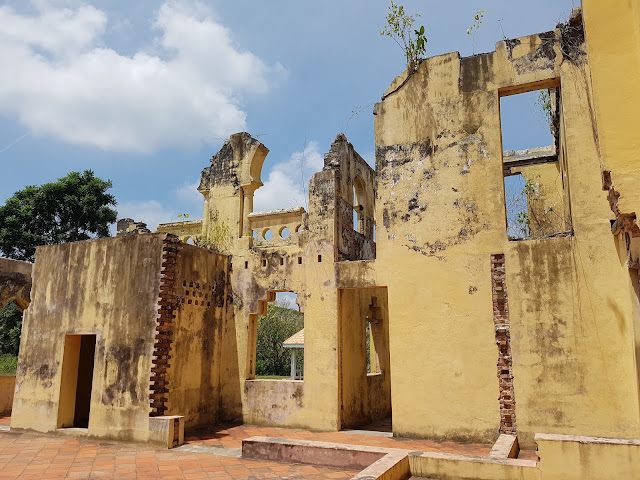 |
| Nothing much remains of Kellas House but you can see remnants of the Dining Hall, Kitchen and Oven. |
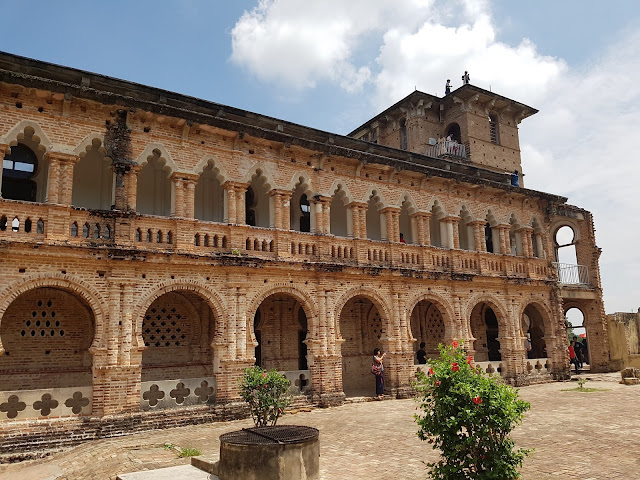 |
| View of the Castle from Kellas House. |
 |
| The circular structure in the middle of the courtyard is not a well; it is apparently the ventilation chamber for the secret tunnel leading to the Hindu temple. |
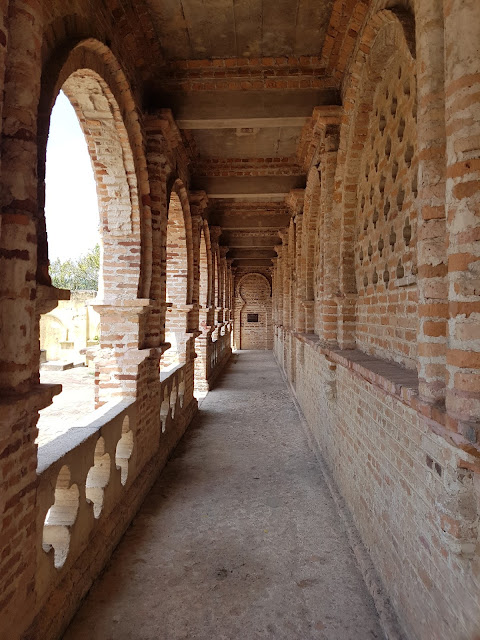 |
| The corridors of the Castle is where the ghost of William is supposed to roam. |
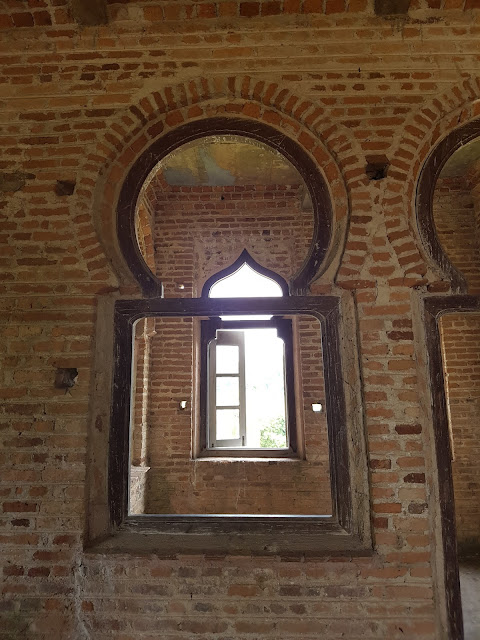 |
| Looking out the window from the Dining Hall. |
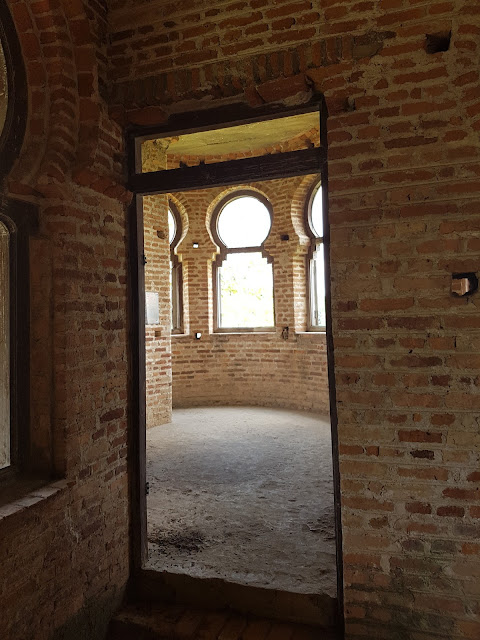 |
| The room where the winding staircase is. |
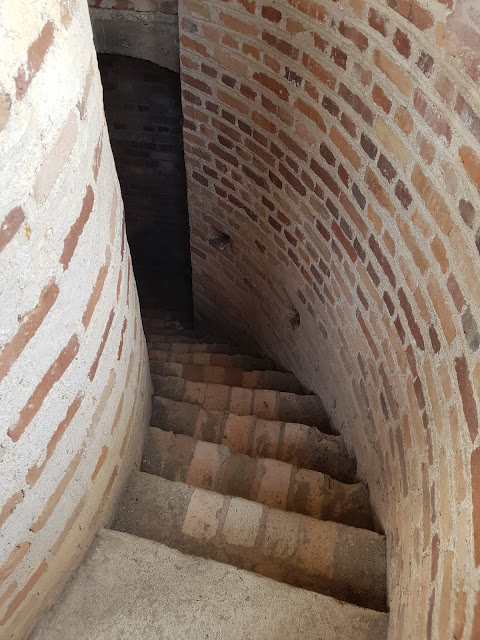 |
| The winding staircase leads downwards into a secret room. |
 |
| The secret room at the bottom is supposedly a dark room for photography. |
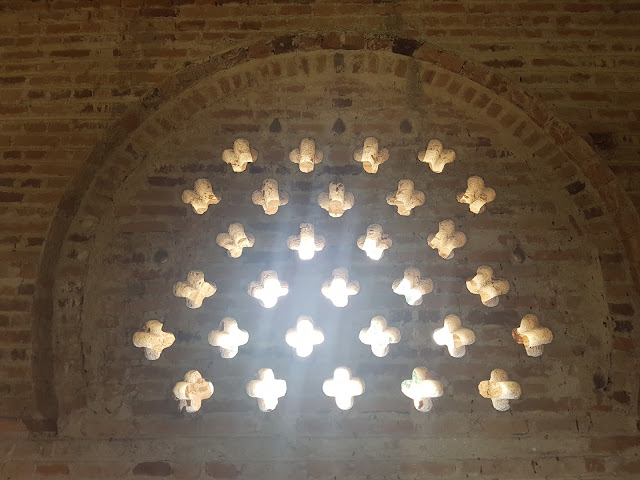 |
| Architectural detail to allow for natural ventilation. |
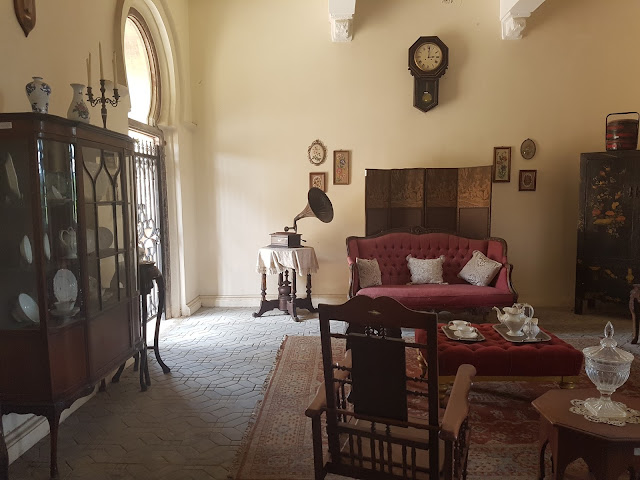 |
| The living room has been restored to replicate what it may have looked like once finished. |
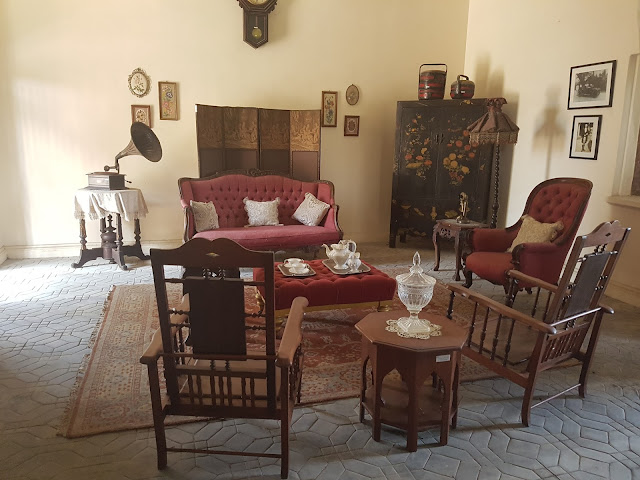 |
| This is the only room that has been restored in the whole castle. |
The living room has been restored with furniture to simulate what the completed castle may have looked like. You can peer into the room but are not allowed to enter.
Next to the living room is the main hall. This has been furnished with display panels where you can read about the history of the castle and see old photographs of William.
You can then make your way upstairs, either by the main staircase or the narrow staircase behind the family altar room.
On the first floor, you can see the Master Bedroom, Helen's room (which is supposedly haunted by her ghost), Anthony's room and a guest bedroom. There is also the creepy linen room, which is pitch black.
Going up to the second floor tower, you will see the lift shaft, which was supposed to house the first elevator in Malaya.
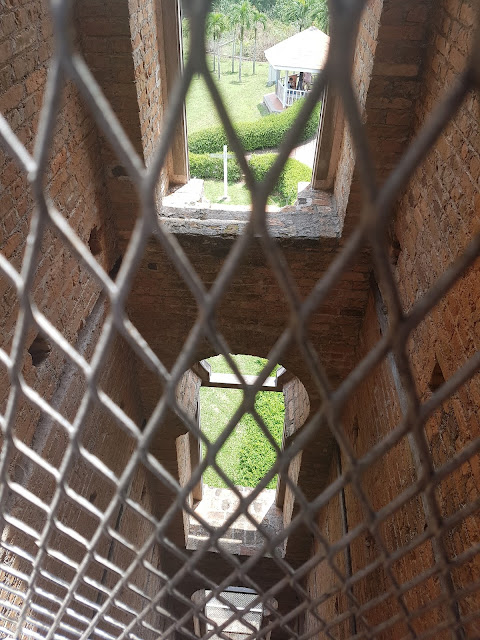 |
| The lift shaft. |
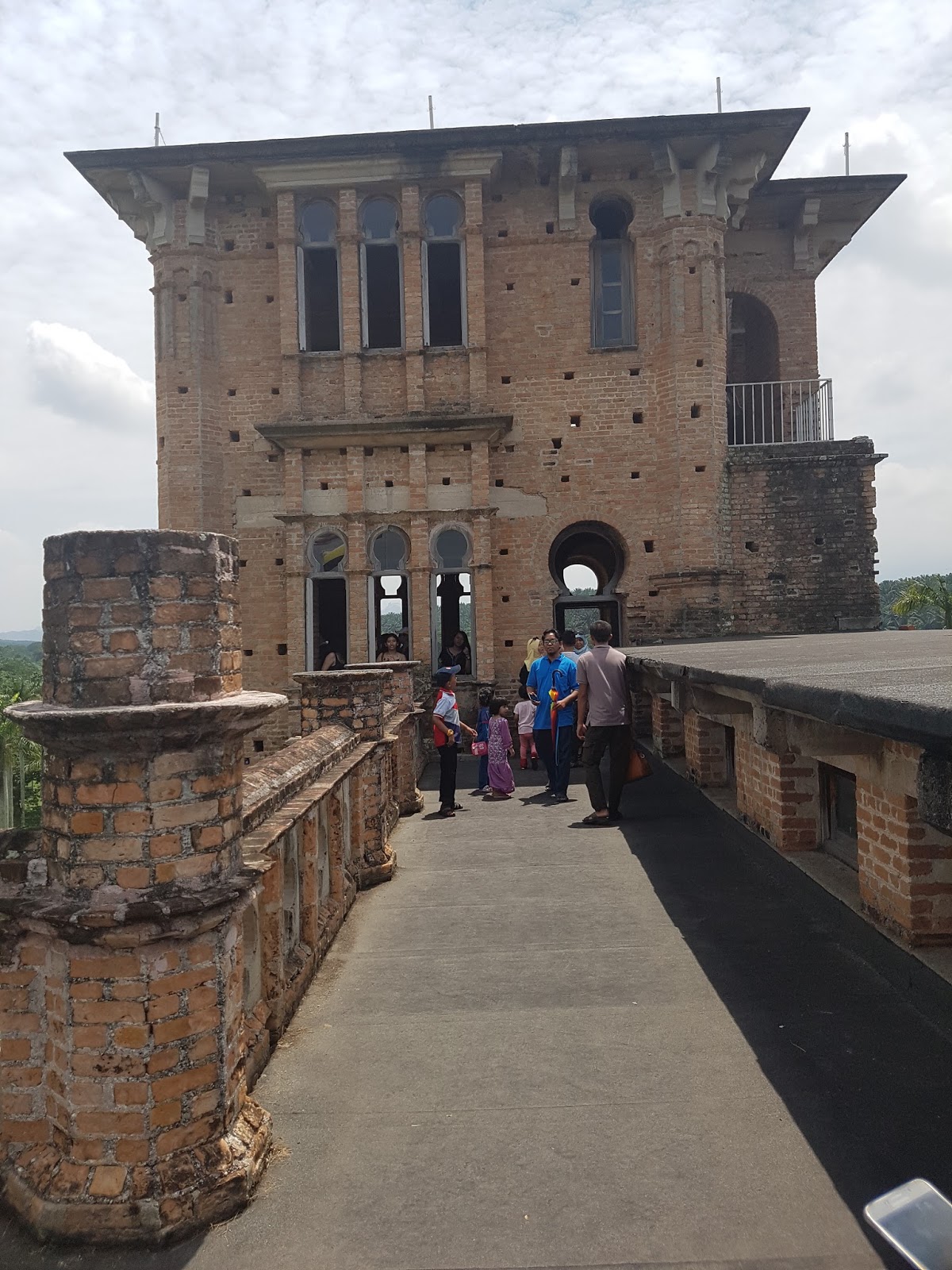
On the second floor, you can also exit out on the main roof. From here you can survey the surrounding landscape and plantation that once belonged to William.
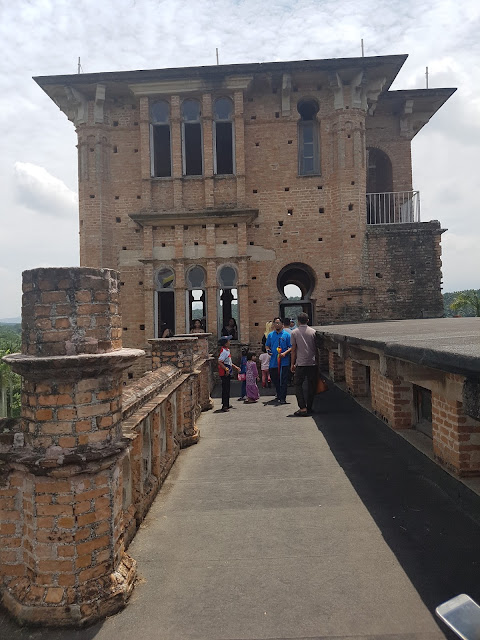 |
| The 2nd floor roof. |
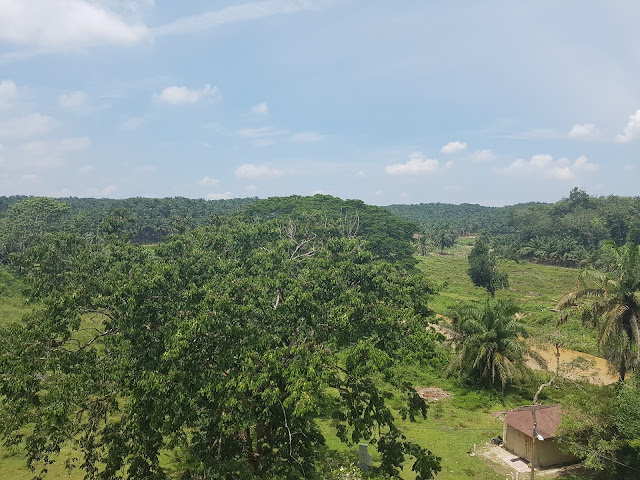 |
| View of the surrounding plantation from the roof. |
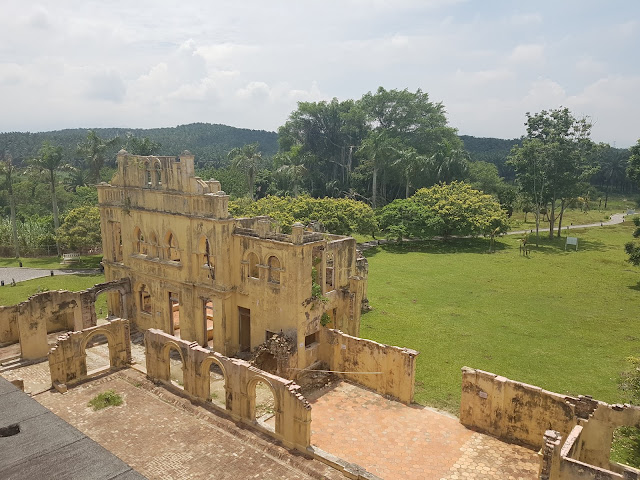 |
| View of Kellas House from the roof. |
 |
| View of the Raya river. |
Going up to the third floor tower, you will come to another room with views to the countryside.
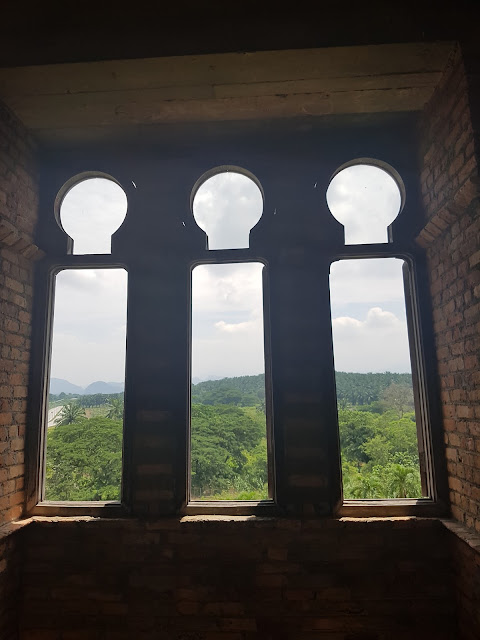 |
| The third floor room. |
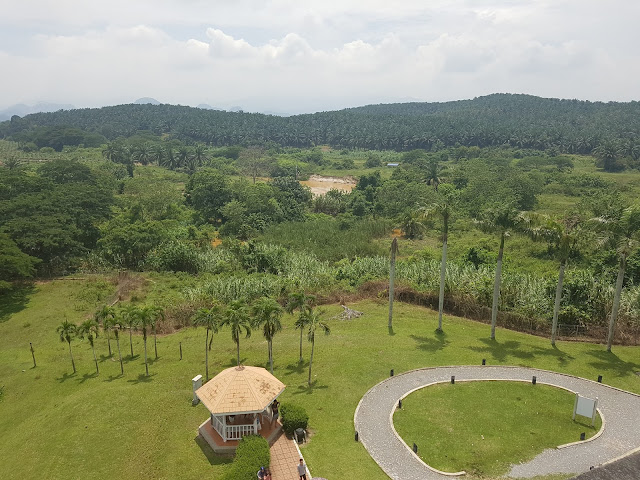 |
| View of the modern gazebo below from the third floor tower. |
Another narrow staircase finally leads up to the roof of the tower itself. This is the highest point of castle.
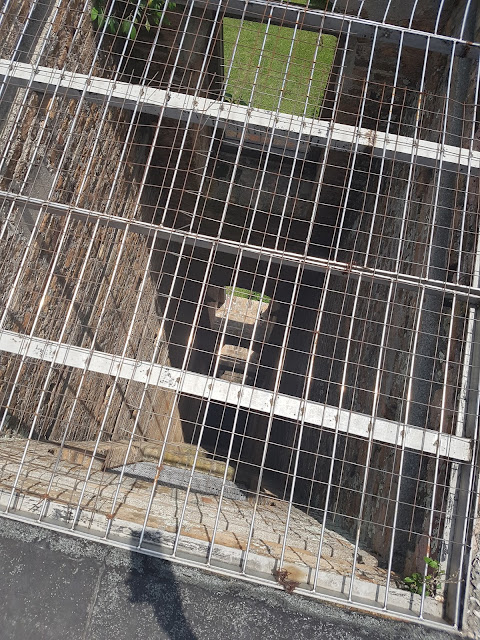 |
| Looking down the lift shaft from the roof of the tower. |
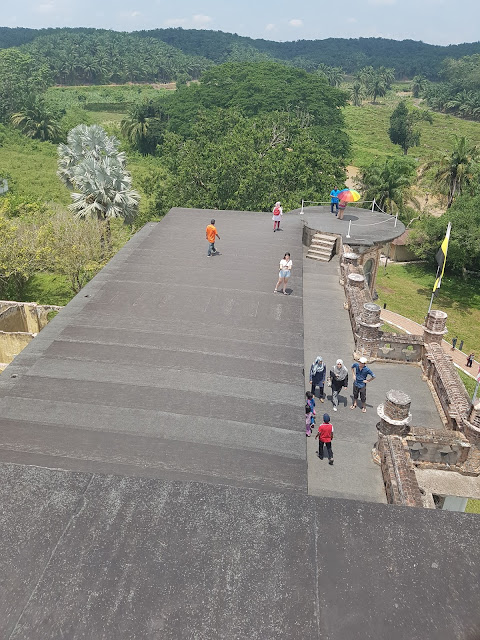 |
| View of the 2nd floor roof from the tower roof. |
 |
| View of the countryside from the tower roof. There are no safety railings, so be careful! |
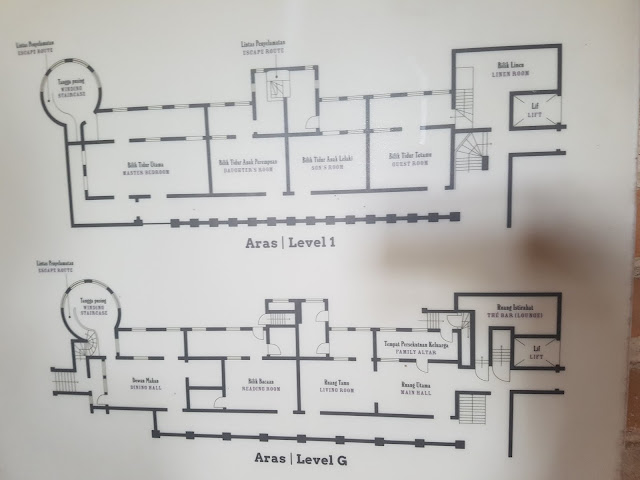 |
| Map of Kellie's Castle. |
Kellie's Castle is truly an interesting tourist site to visit, providing a glimpse into the life of the British during colonial times in Malaya. Stories of hauntings only add to the allure. If you have time, you can even visit the Sri Maha Mariamman temple down the road, where you can look for the small statue of William Kellie Smith built among the hindu deities on the temple by his grateful workers all those years ago.
Kellie's Castle
Address: KM 5.5, Jalan Gopeng, Batu Gajah, Perak.
Opening Hours: Daily, 9am to 6pm.
Ticket Price: RM10 per adult and RM8 per child.